There’s a moment in life—usually somewhere after your fiftieth hard lesson—when you realise you’ve been handed a nickname you never agreed to.
Not a friendly one.
Not a cute one.
A label.
A role.
A cardboard cut-out version of you that other people find useful because it makes them feel comfortable.
And if you’ve ever lived through mental illness, addiction, poverty, social stigma, betrayal, or years of being misunderstood…
you’ll know exactly what I mean.
Because at some point, someone will look at you with that sympathetic face—half pity, half superiority—and treat you like you’re a harmless, slow-moving side character in their story.
And that’s when the words start forming in your mind like a thundercloud:
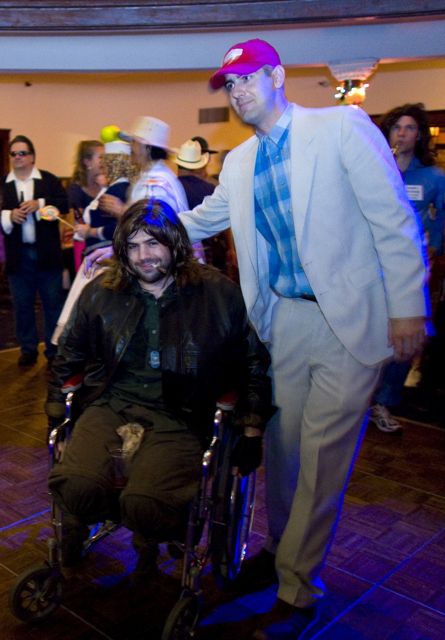
My name is not Forrest Gump.
I’m not your inspirational mascot.
I’m not your “special” friend.
I’m not a walking lesson in gratitude.
I’m not your entertainment.
I’m a real man with a real brain, real scars, real memories, real intelligence, and real dignity.
And I’m done being politely patronised.

The Forrest Gump Trap: When People Like You… For the Wrong Reasons
Now let’s get something straight:
I like the movie Forrest Gump.
Everyone does.
It’s a brilliant film. It’s funny, heartbreaking, inspiring.
But the cultural effect of Forrest Gump is something else entirely.
Because it created a “safe” stereotype society loves:
A man who suffers, gets mocked, gets used, gets hurt…
but stays cheerful, polite, innocent, and useful.
He never confronts anyone.
He never holds anyone accountable.
He never demands respect.
He never says, “Stop treating me like I’m an idiot.”
He’s everyone’s favourite type of vulnerable person:
the one who doesn’t make them feel guilty.
And that’s the trap.
Some people don’t love you because they respect you.
They love you because you’re manageable.
You don’t threaten their ego.
You don’t challenge their worldview.
You don’t disrupt their comfort.
So they pat you on the head emotionally and keep you in the role.
And if you’ve ever been “othered”—mentally, socially, financially—then you’ve felt this.
It’s subtle, but it’s constant.
A tone.
A look.
A condescending kindness.
A quiet assumption that you’re not fully capable.
They don’t say it directly.
But you feel it.
The Day I Realised: People Were Talking At Me, Not To Me
The Forrest Gump treatment isn’t always cruel.
That’s what makes it so hard to call out.
Most of the time it hides under the mask of “being nice.”
People speak to you slowly.
They simplify things.
They laugh a little too much at your jokes.
They offer advice you didn’t ask for.
They act like you need permission to have an opinion.
It’s not hatred.
It’s something worse.
It’s dismissal dressed as kindness.
And when someone treats you like that long enough, something starts to happen inside you:
You begin to question your own perception.
You start thinking:
- “Maybe I am dumb.”
- “Maybe I am broken.”
- “Maybe I should just keep quiet.”
- “Maybe I don’t deserve real respect.”
That’s not humility.
That’s psychological erosion.
And it adds up over time until one day your soul says:
Enough.
When You’ve Been Labelled “Crazy,” People Stop Listening
Here’s one of the cruelest truths about modern society:
Once you’ve been tagged with a mental health label,
many people stop hearing your words and start hearing your diagnosis.
You could say something completely logical—practical even—and it gets filtered through suspicion:
“Is he okay today?”
“Is that paranoia?”
“Is he going through something?”
“He’s intense.”
Meanwhile, someone else says the same thing with a suit on and a LinkedIn profile and suddenly it’s “insightful.”
That’s how stigma works.
It’s not always open hostility.
It’s the quiet removal of credibility.
And it is one of the fastest ways to make a person feel dehumanised.
I’m not a diagnosis.
I’m not your cautionary tale.
I’m not your “mental health awareness moment.”
I’m a man.
A complicated man.
A wounded man.
A stubborn man.
But still a man.
And I deserve to be listened to like one.
The Soft Bigotry of Low Expectations
Let me name the monster properly:
The soft bigotry of low expectations.
This is when people don’t expect much from you, so they treat you like a child.
And if you succeed in anything, they’re shocked.
Like you’ve performed a magic trick.
“Oh wow… you wrote a book?”
“Oh wow… you ran a business?”
“Oh wow… you’re really articulate.”
Yes.
I am articulate.
Because I’ve spent decades thinking.
I’ve spent decades reading.
I’ve spent decades surviving a mind that tried to tear itself apart.
That produces something.
It produces depth.
It produces perspective.
It produces intelligence forged in fire.
So no, it’s not surprising.
It’s actually inevitable.
But people don’t know what to do with a man who:
- has been through hell
- lived to tell the story
- and still has his mind intact
That doesn’t fit their script.
So they shove you into the closest cardboard role:
“Forrest Gump.”
Harmless.
Simple.
Innocent.
Non-threatening.
A feel-good story.
And I’m telling you now:
That role does not fit me.
I’m Not Here to Make You Feel Better About Your Life
Some people like having a “Forrest Gump” around because it makes them feel lucky.
They look at your struggles and think:
“Well, at least I’m not him.”
They don’t say it.
But it’s there.
And they get a quiet dopamine hit from it.
That’s why society loves:
- tragic stories
- downfall documentaries
- addiction confessions
- mental breakdown interviews
- “before and after” miracles
It allows people to consume suffering as entertainment.
Like emotional Netflix.
And if you recover, you become a feel-good headline:
“Look at him go!”
But here’s what nobody talks about:
Recovery doesn’t turn you into a puppy.
It turns you into someone who knows the truth about human nature.
It makes you sharp.
It makes you cautious.
It makes you allergic to manipulation.
And people who live in shallow comfort don’t like sharp people.
Sharp people pierce illusions.
So they try to soften you with a label.
The Real Reason People Put You in a Box
Let’s get brutally honest.
Most people are not deeply evil.
They’re just deeply lazy.
Emotionally lazy.
Mentally lazy.
Socially lazy.
If they can label you, they don’t have to understand you.
If they can reduce you, they don’t have to engage with you.
If they can put you in a category, they don’t have to face complexity.
And complexity scares people.
A man who:
- has had psychotic episodes
- survived addiction
- rebuilt his life
- gained insight
- became self-aware
- is capable of deep thought
…is complex.
He doesn’t fit the tidy social shelves.
So people go looking for a familiar reference point.
And pop culture provides one instantly:
“Forrest Gump.”
It’s an easy shortcut.
But it’s disrespectful.
And it’s wrong.
I’m Not Slow. I’m Selective.
Here’s something you learn as you age:
Silence is not stupidity.
Sometimes silence is strategy.
Sometimes silence is:
- restraint
- wisdom
- self-protection
- emotional regulation
- choosing your battles
- not wasting breath on people who don’t listen
A lot of men who’ve been through serious life storms aren’t chatty.
They’re not “slow.”
They’re measuring the room.
Because when you’ve lived through chaos, you don’t rush into conversations like an excited Labrador.
You observe first.
You watch tone.
You watch intentions.
You watch body language.
You watch the social game.
Then you decide whether the situation is safe.
That’s not weakness.
That’s survival intelligence.
But of course, to shallow people, that looks like:
“Oh, he’s quiet… maybe he doesn’t understand.”
No.
I understand plenty.
I just don’t waste words on people who aren’t worth them.
Being Kind Does Not Mean Being Naïve
Forrest Gump is kind and naive.
That’s part of his charm.
But here’s the problem:
Modern society assumes kindness equals weakness.
If you’re polite, you’re seen as someone who can be pushed.
If you’re calm, you’re seen as someone who can be manipulated.
If you’re forgiving, you’re seen as someone who can be exploited.
And that’s why some people try to treat good men like Forrest Gump.
Because they think you won’t bite back.
They think you’ll tolerate disrespect.
They think you’ll accept crumbs.
They think you’ll remain grateful for basic decency.
But you reach an age—especially as a man—where you realise:
Being kind doesn’t mean being harmless.
It means you have control.
It means you choose not to be cruel.
Not that you’re incapable of defending yourself.
And if anyone needs to hear that today, it’s the quiet men.
The men who’ve been through it.
The men who get underestimated.
I’ve Been Through Things You Couldn’t Mentally Survive
This is not arrogance.
It’s a fact.
Some people have lived soft lives.
Safe lives.
Predictable lives.
And good for them.
But then they meet someone who has lived through:
- institutional systems
- addiction traps
- mental illness episodes
- stigma
- betrayal
- isolation
- financial hardship
- rebuilding from scratch
And they speak to him like he’s fragile glass.
It’s insulting.
Because the truth is:
A man who has survived collapse and rebuilt himself has a kind of strength most people don’t understand.
Not the loud strength.
Not the gym selfie strength.
The inner strength.
The kind that keeps going when nobody is clapping.
So when someone treats me like a soft mascot…
I don’t feel hurt.
I feel amused.
Because they have no idea who they’re talking to.
Society Loves a “Safe Victim”
There’s a weird social addiction in the modern world:
People love victims… as long as they’re not difficult.
A safe victim:
- never gets angry
- never says no
- never demands respect
- never pushes back
- never holds anyone accountable
- always stays sweet
That’s why society celebrates certain “inspirational” people.
Not because they’re inspiring.
But because they’re compliant.
They’re easy to praise.
They don’t force anyone to face the uncomfortable reality:
That suffering changes people.
It hardens them in places.
Sharpens them in others.
It makes them less willing to play social games.
So the world tries to pressure survivors into performing a role:
“Be the nice broken person.”
No.
I’m not broken.
I’m not your morality play.
And I’m not here to make the world feel good about itself.
The Day You Stop Accepting the Role Is the Day You Get Free
Here’s the turning point:
It happens when you stop caring whether people approve of you.
Not because you hate people.
But because you finally understand:
Approval is often purchased through self-betrayal.
You don’t get respect by being agreeable.
You get respect by being real.
You get respect by having boundaries.
You get respect by refusing to play a role you didn’t choose.
And when you stop accepting the Forrest Gump treatment, something changes.
People fall into two groups immediately:
Group 1: The good ones
They adjust.
They respect you.
They treat you as an equal.
Group 2: The users
They get offended.
They mock you.
They reject you.
They paint you as arrogant.
And that’s perfect.
Because now you can see who’s who.
A man who starts valuing himself becomes a walking filter.
“My Name Is Not Forrest Gump” Means I’m Not Your Punchline
For a lot of men, especially older men, there’s a lifetime of jokes they swallowed.
They laughed along when they should’ve said:
“That’s not funny.”
They accepted disrespect because they didn’t want conflict.
They played the clown to stay included.
They made themselves smaller so others could feel bigger.
But the truth is:
If the joke is always on you…
it’s not humour.
It’s hierarchy.
And a man eventually gets tired of being at the bottom of a social pecking order he never agreed to join.
So he stands up quietly and says:
“My name is not Forrest Gump.”
Which really means:
- I have dignity
- I have intelligence
- I have boundaries
- I deserve respect
- and I won’t accept less
The Difference Between Humility and Humiliation
Let’s clear up another trap.
A lot of good men confuse humility with humiliation.
Humility is:
- self-awareness
- being teachable
- not having an ego problem
Humiliation is:
- tolerating disrespect
- accepting mockery
- letting others diminish you
Humility is strength.
Humiliation is self-abandonment.
And many men—especially those who have felt like outsiders—get trained to accept humiliation because it keeps the peace.
But peace built on self-erasure is not peace.
It’s slow death.
So yes, be humble.
But don’t be humiliated.
And if you need a sentence to reclaim yourself, use mine:
My name is not Forrest Gump.
What I Actually Am
If I’m not Forrest Gump, then what am I?
I’m a man who has lived long enough to understand:
- Most people are asleep
- Most systems are designed for control
- Most relationships are transactional
- Most social circles are fragile
- Most “normal” people are one crisis away from collapse
And I’m a man who decided to do the hard thing:
Stay awake anyway.
I’m not perfect.
I’m not always calm.
I’m not always right.
But I’m real.
I think.
I observe.
I learn.
I rebuild.
And I refuse to be reduced.
Why This Matters More Than Ever in the Age of Screens
The modern world is a label factory.
If you’ve been online for more than ten minutes, you’ve been turned into a category:
- narcissist
- empath
- ADHD
- trauma survivor
- avoidant attachment
- anxious attachment
- red flag
- green flag
- low value
- high value
- sigma
- beta
- incel
- simp
Everyone has a diagnosis.
Everyone has a label.
Everyone has a “type.”
And none of it makes people wiser.
It just makes them more judgmental.
So if you’re a man who values his mind and his freedom, you have to fight back against reduction.
You have to defend your complexity.
You have to refuse being turned into a meme.
Because when you let the world label you, the world controls you.
That’s the real issue.
A Personal Rule I Live By Now
Here’s my new rule:
If you don’t respect me, you don’t get access to me.
That’s it.
No screaming.
No revenge.
No drama.
Just distance.
Because at a certain point, you realise something very liberating:
You don’t have to convince anyone.
You just have to choose your company.
And if someone insists on treating you like a harmless character in their story…
you remove yourself from the script.
Final Words: I’m Not Your Lesson. I’m My Own Man.
So let me close this properly.
I’m not Forrest Gump.
I’m not here to be:
- laughed at
- talked down to
- used
- patronised
- underestimated
- turned into a motivational poster
I’m a man who has lived.
A man who has survived.
A man who is still learning.
A man who still has work to do.
But I’m not anyone’s mascot.
And if you’ve ever been treated like your dignity is optional…
if you’ve ever been made to feel small so someone else could feel safe…
then borrow this phrase.
Say it calmly.
Say it once.
And mean it:
My name is not Forrest Gump.
Because the moment you stop accepting the role… is the moment you start living as yourself
Dating Tips for Men and Women is the brutally honest, laugh-out-loud, street-smart guide for anyone who’s ever felt like the dating world forgot to invite them to the party.
Forget glossy influencers and billionaire playboys — this book is for the rest of us. Packed with raw truths, dark humour, confidence hacks, and real-world strategies, it shows you how to win at dating without six-pack abs or six-figure bank accounts.
If you’ve got a pulse and a sense of humour, you’ve already got a shot. This book just ups your odds. Click here to buy on Amazon
Related Articles
- Men Have Lifted The Standards Bar On Women
- Facebook Replaced the Local Pub — Especially for Men Over 65